
$76.68
Add to Cart
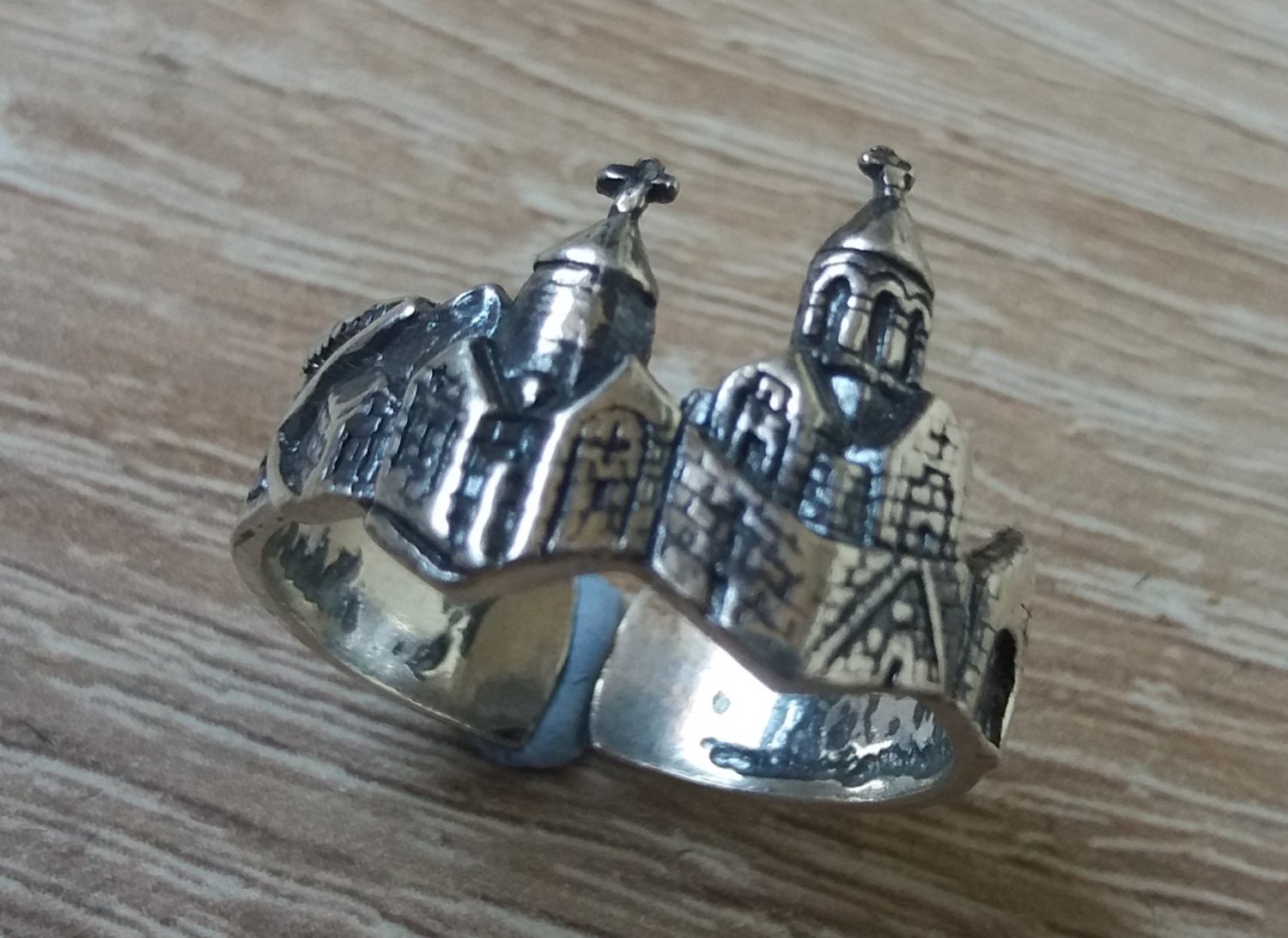
Novarank Monastery Adjustable Ring Sterling Silver, Armenian Ring
Only 1 available
Details
Shipping: Australia: $26.00 (more destinations)
Condition: Brand new
Returns: 7 days, buyer pays return shipping (more)


Novarank Monastery Adjustable Ring Sterling Silver, Armenian Ring, Armenian Church Ring, Ring of Faith
Beautiful handmade adjustable ring to your finger with the Novarank Monastery made from sterling silver .925.
Noravank is a 13th-century Armenian monastery, located 122 km from Yerevan in a narrow gorge made by the Amaghu River, near the town of Yeghegnadzor in Armenia. The gorge is known for its tall, sheer, brick-red cliffs, directly across from the monastery. The monastery is best known for its two-storey Surb Astvatsatsin (Holy Mother of God) Church, which grants access to the second floor by way of a narrow stone-made staircase jutting out from the face of building.
The monastery is sometimes called Noravank at Amaghu, with Amaghu being the name of a small and nowadays abandoned village above the canyon, in order to distinguish it from Bgheno-Noravank, near Goris. In the 13th–14th centuries the monastery became a residence of Syunik's bishops and, consequently, a major religious and, later, cultural center of Armenia closely connected with many of the local seats of learning, especially with Gladzor's famed university and library.
Weight 4gr
Ref 18
Beautiful handmade adjustable ring to your finger with the Novarank Monastery made from sterling silver .925.
Noravank is a 13th-century Armenian monastery, located 122 km from Yerevan in a narrow gorge made by the Amaghu River, near the town of Yeghegnadzor in Armenia. The gorge is known for its tall, sheer, brick-red cliffs, directly across from the monastery. The monastery is best known for its two-storey Surb Astvatsatsin (Holy Mother of God) Church, which grants access to the second floor by way of a narrow stone-made staircase jutting out from the face of building.
The monastery is sometimes called Noravank at Amaghu, with Amaghu being the name of a small and nowadays abandoned village above the canyon, in order to distinguish it from Bgheno-Noravank, near Goris. In the 13th–14th centuries the monastery became a residence of Syunik's bishops and, consequently, a major religious and, later, cultural center of Armenia closely connected with many of the local seats of learning, especially with Gladzor's famed university and library.
Weight 4gr
Ref 18
Other Products from aparmenia (View All)
-
$52.98

-
$52.98

-
$96.19
-
$203.54
-
$62.73

-
$62.73

-
$92.01

-
$62.73

-
$62.73

-
$62.73



 AM, Yerevan